


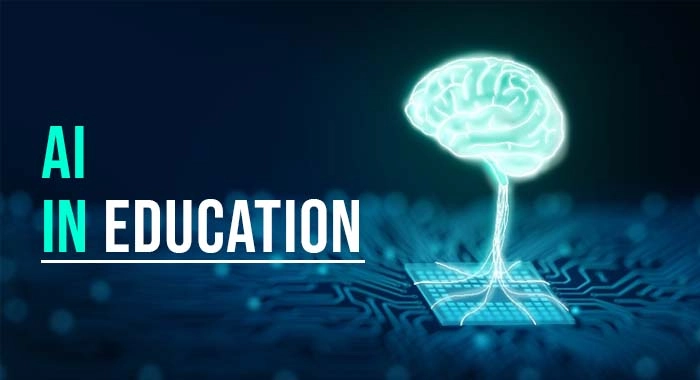
As the world of education continues to transform rapidly, a silent revolution is being conducted, and that is via the force of Artificial Intelligence (AI). Consider being in a classroom where every student has a personal tutor who works around the clock. And has the flexibility to work with the learning style and speed of each individual student. It is not the desired dream but a current reality due to the revolutionary application of AI to the teaching field. With this learning revolution right around the corner, it is essential to examine how AI will transform the learning experiences. Also, ensure that education has never been as personalized, universal, and effective as today.
Table of Contents
Within this article, we shall explore the complex position of AI in education and discover all the various ways it is improving the learning experience. Also, it benefits both students and teachers. We will be discussing the role of AI in personalized learning benefits, in particular, how AI adapts education to the specific needs of the learners. We will also highlight some of the best AI tools for students to utilize, demonstrating the new technologies.
The Silent Revolution: How Is AI Entering Classrooms?
The implementation of AI in education is currently underway, and we do not even notice it many times. When it comes to smart classrooms and adaptive AI-powered learning platforms, it is apparent that AI is finding its way in many aspects.
Smart Classrooms
A growing number of smart classrooms are being introduced that are supplied with AI-powered learning platforms. Such classrooms take advantage of AI to improve the learning process through real-time feedback, handling administrative duties, and even tracking participation by students. As an example, AI can be used when one provides a lecture to students and adjusts content delivery accordingly to guarantee the best understanding.
Adaptive Testing and Automated Grading
AI is changing the methods of delivering and grading assessments and is outlining adaptive testing environments that simplify the evaluation process. It delivers informative data about the performance of the student. Adaptive e-learning platforms leverage AI algorithms to change question difficulty. According to how an individual student answers the question, to provides them with a more individualized assessment experience accurately reflecting their knowledge and skills.
Grade determination systems with AI, however, use AI to correct the student tasks, quizzes, and tests with simplicity and precision. Automation of the grading process would allow educators to have more time, less bias, and useful data on the performances of students. So that they can give specific feedback and guidance that would aid in improving their performance.
Personalized Learning: The Game Changer
The fact that AI can be used in providing individual learning experiences is perhaps one of the greatest advantages of utilizing AI in education. The demand for diverse learning capabilities of students is a dilemma that traditional education systems tend to fail. But with the use of AI, this dynamic is altered because learning paths are personalized to individual students, often through sophisticated adaptive e-learning platforms.
Tailored Learning Paths
Artificial intelligence has the potential to examine the results of a student on the fly and change the content so as to meet his or her learning pace and preferences. To give an example, when a student is amazing at mathematics and has problems with reading comprehension, the AI can include more sophisticated math tasks. Also, delivers supplemental reading materials using extra resources.
Benefits for Different Learning Styles
The role of AI in personalized learning benefits is suitable for any type of learning. Visual learners will have access to AI-created diagrams and videos, and auditory learners will have access to voice assistants powered by AI. Kinesthetic learners will have a chance to enjoy interactive simulations. This personalization allows every student to study as they prefer in the most effective and pleasing manner.
Ed-Tech Innovations You Didn't See Coming
Ed-tech innovations in the educational technology world are swarming around to change the learning environment. These include some of the most inspiring AI-based ed-tech applications:
AR/VR in Education
New immersive learning opportunities are being generated by Augmented Reality (AR) and Virtual Reality (VR), which, not so long ago, were dreamed of. Virtual field trips to historical locations, examination of the human body in 3D, or virtual science experiments are some of the things that students can do. The technologies used make the study more interactive and stimulating, making students understand more complicated things easily.
AI Tutors and Voice-Based Assistants
Artificial intelligence tutors are also getting more advanced, as they provide individualized tutoring to students at any hour. Such an AI tutor for students is able to respond to queries, make explanations, and even present practice questions depending on the level of the individual. Even voice-based assistants such as Amazon Alexa and Google Assistant are becoming incorporated into educational environments. These are enabling students to get their information and resources without having to use their hands.
Top Free & Paid AI Tools Students Are Using in 2025
AI only keeps improving, as does the equipment that students have access to. These are some of the best-paid and free AI tools for students in the year 2025:
Free AI Tools for Students
- ChatGPT: A very useful development in language models, which can offer aid in writing, research, and even coding.
- Socratic: An app that might assist students with their homework with an AI-based learning director and gives specific clarifications and materials.
- ScribeSense: A note-taking app integrated with AI to assist students in organizing and summarizing notes effectively.
Paid AI Tools for Students
- Grammarly Premium: An artificial intelligence-based writing software program, which provides an enhanced grammar checker, plagiarism checker, and other writing tips.
- Wolfram Alpha Pro: A universal computing knowledge engine that offers expert-level responses and solutions to complicated queries.
- Quizlet Plus: Adaptive e-learning platforms with the use of AI to give personalized study plans, advanced flashcards, and interactive quizzes.
The Ethical Debate: Should We Be Worried?
Even though there are many advantages of AI in education, it is critical to discuss the ethics associated with it. Problems like the bias of AI algorithms, data protection, and the possibility of AI replacing teachers should be thoroughly examined.
Bias in AI Algorithms
Bias in AI algorithms is one of the major ethical issues about AI in education. These could implant unintentional bias, stereotypes, and discrimination trends that could affect the choices and suggestions of AI-powered learning platforms or educational tools.
Data Privacy
Data privacy and security is another issue of supreme importance to the field of AI in education. AI-based educational products gather, analyze, and retain large sets of data on students. Such as their personal and academic data and learning patterns, to provide customized learning environments and to guide academic achievements. Nonetheless, such wide gathering and use of student information creates privacy violations and data leakage issues as well as misuse of confidential data.
Replacing Teachers
The fear of the world losing jobs due to the use of AI as a substitute for teachers is also prominent. Nevertheless, it is more reasonable to consider AI as something that can assist and enhance the work of educators and not replace them completely. AI makes it easier to deal with administrative affairs and offer individual learning experiences. So that teachers can spend more of their time on mentoring and guiding students.
Conclusion: Are You Ready for the Future of Education?
AI is revolutionizing the education sector, and we are yet to learn its full extent. Whether it is the personalized experiences of learning or the new ed-tech innovation tools, AI is bringing education to more people in an interesting manner. In our acceptance of such changes, we must speak to the ethical issues and make sure AI is applied responsibly and fairly. From AI-powered learning platforms to the role of AI in personalized learning, technology is helping students learn better, faster, and smarter.
AI in education is quietly transforming this field; it is time to capitalize on it. The question is no longer “Will AI change education?” but “How will we adapt to it?”
The silent revolution is here. Are you ready?
Comments (0)
No Comments Found
FaQ's
-
How is AI used in education today?
AI now has applications in education through many forms, such as smart classrooms, adaptive testing, automated grading, personalized learning benefits systems, and AI tutor for students.
-
What are the benefits of AI in learning?
There will be all forms of benefits of AI in learning, such as individual learning experiences, enhanced engagement, and interaction via AR/VR.
-
Are AI tools replacing teachers?
AI tools can save administrators and instructors a significant amount of time because they assist with various administrative and tutorial tasks. But they can also be used as a tool in the classrooms, as they do not replace human beings.
-
Which AI tools can help students?
Such devices as ChatGPT, Socratic, ScribeSense, Grammarly Premium, Wolfram, and Quizlet Plus can be called one of the best AI tools for students.
-
What is the future of AI in education?
AI will shape education with tools like virtual classrooms that feel real, voice-powered learning helpers, smarter data tools to help teachers, and systems that design unique career paths tailored to each student.
Related Articles
-
 How to Changed Your Grades Overnight
blog
Published on 25 September 2025 -
 Top Dental Colleges in UP
blog
Published on 17 September 2025 -
 Amity University Fee Structure
blog
Published on 17 September 2025 -
 High-Paying Jobs After 12th Science: Top Career Paths to Consider
blog
Published on 17 September 2025 -
 Study tips for students
blog
Published on 26 August 2025 -
 NEET Syllabus
blog
Published on 25 August 2025 -
 MBBS in India
blog
Published on 25 August 2025 -
 Top BAMS Colleges in UP
blog
Published on 25 August 2025 -
 MBBS Abroad
blog
Published on 25 August 2025 -
 Top Private Medical Colleges in India
blog
Published on 25 August 2025 -
 Maharashtra Medical Colleges Fee Structure
blog
Published on 25 August 2025 -
 Best Career Options After 12th
blog
Published on 25 August 2025 -
 Best Apps for Students
blog
Published on 20 August 2025 -
 NEET Counselling
blog
Published on 13 August 2025 -
 High Salary Courses after 12 Science
blog
Published on 11 August 2025 -
 Best Course After 12th Commerce
blog
Published on 11 August 2025


